I'm always excited to take on new projects and collaborate with innovative minds.

Email

support@musaiblone.com

Address

Tujjar Sharif, Sopore, Baramulla District, Jammu and Kashmir, India – [193201]

Social Links

Artificial Intelligence.

How to Master AI: A Complete Guide for Beginners to Experts

Introduction to AI: Learn how to create AI step-by-step, starting with the basics. Practical roadmap, project plans, and tools, as well as ethics and image prompts. Just right for amateurs.
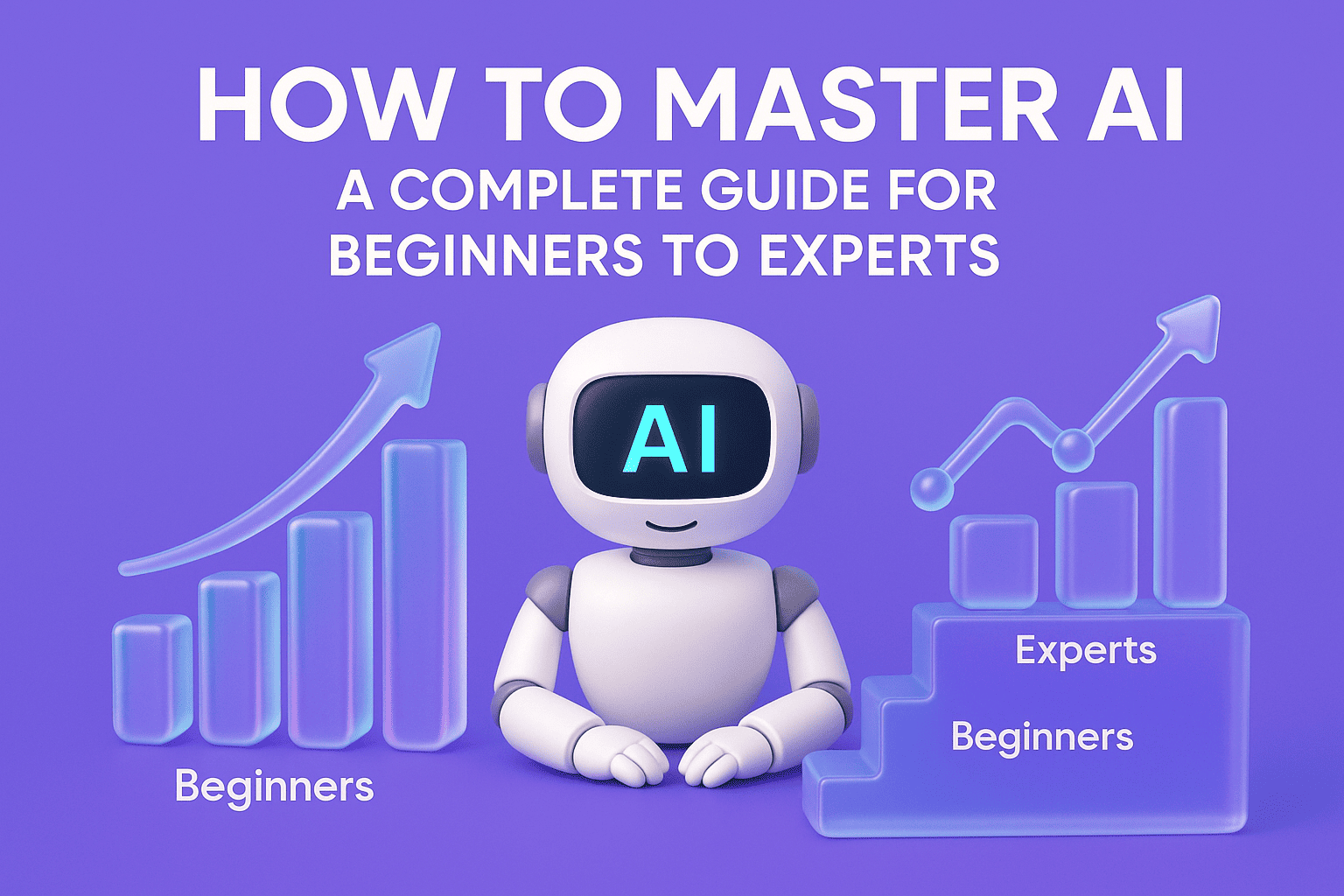
How to Master AI: A Complete Guide for Beginners to Experts

Introduction: What this guide provides you.

Artificial Intelligence (AI) is transforming the way we work, create, and solve problems. This tutorial will step-by-step show you the way to learn AI, starting with zero experience and ending with the expert level. I apply basic English, concise paragraphs, and effective steps. I also demonstrate where to insert images in the article and provide composed image prompts that you can use to create images.

Read this article and follow a clear direction, projects to work on, tools to work with, and checklists to rank this page highly on Google.
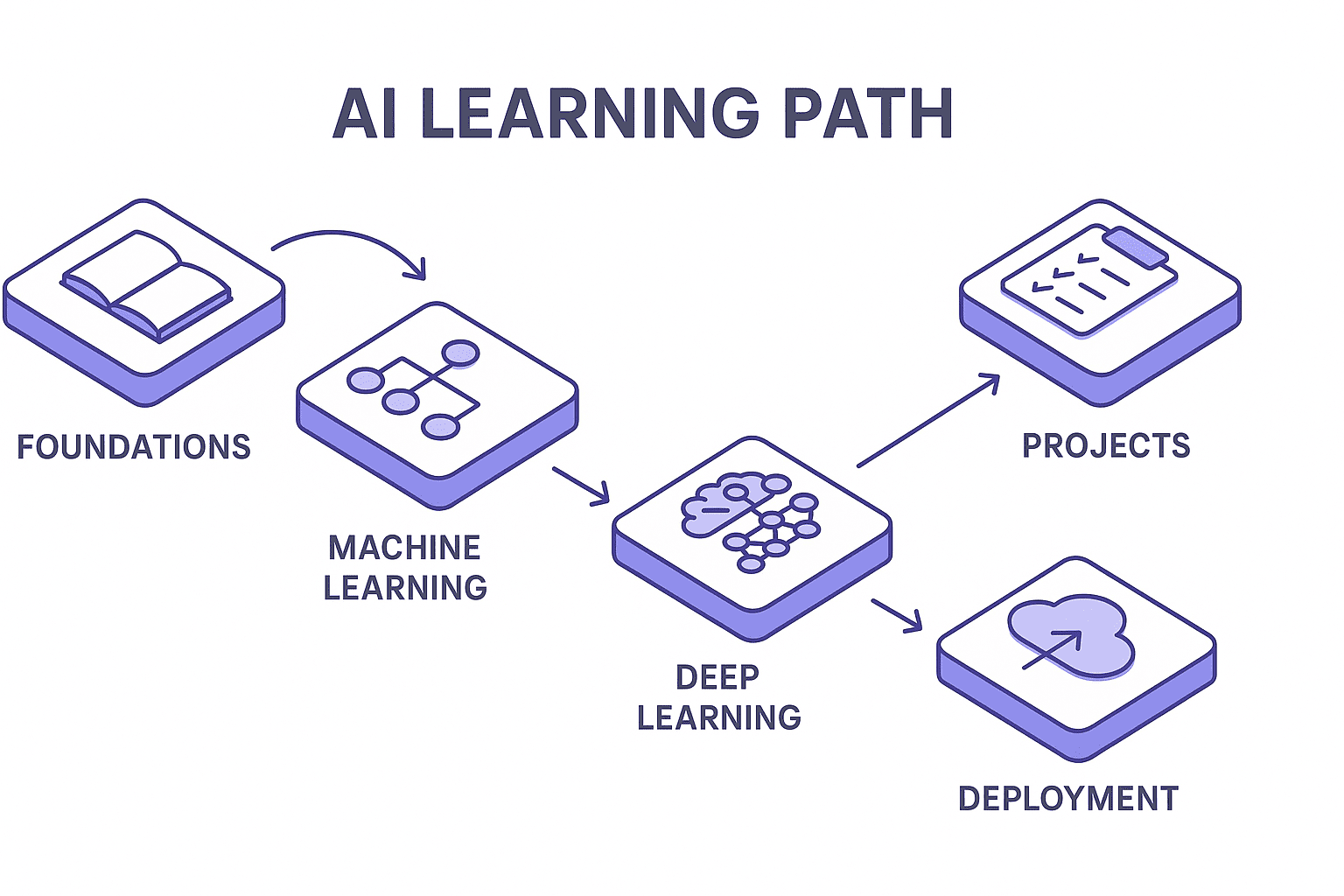
Quick roadmap (one-line view)

20250930-1126-ai-learning-flowchart-simple-compose-01k6ck1cwne4bbdnqzq4wmmdyn-1.png
  1. Introduction Learn Python + math (linear algebra, probability).
  2. Learn about machine learning.
  3. Project practice (beginner, intermediate, and advanced).
  4. Study deep learning and architecture ( TensorFlow, PyTorch ).
  5. Use models and learn MLOps.
  6. Continue to build, read studies and abide by ethics.

1. Foundations: Learn the first (Step-by-step)

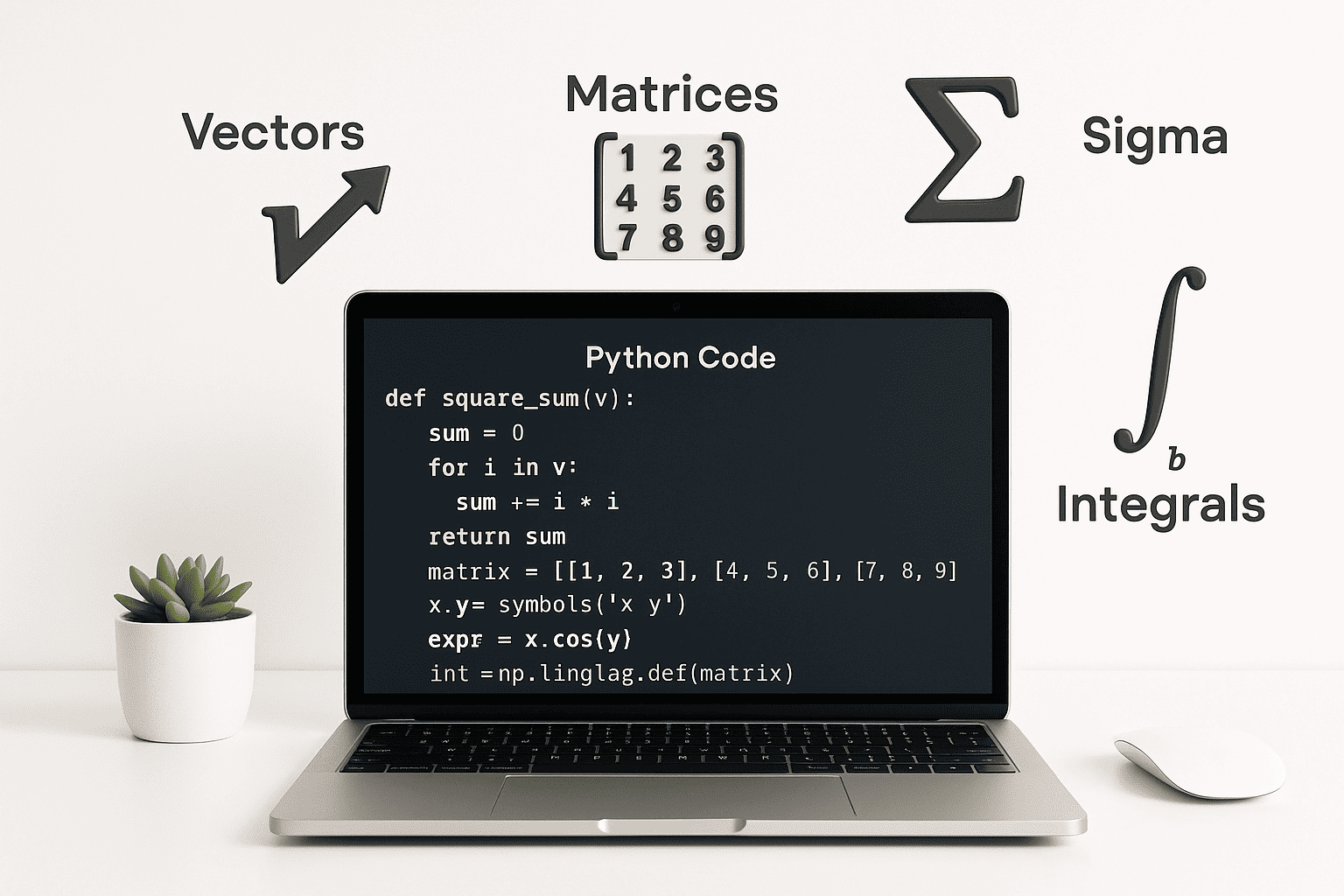
20250930-1134-coding-with-math-symbols-simple-compose-01k6ckfs10fea8vz4tzmhg9dag.png

1.1 Learn Python (2–6 weeks)

Why: Most AI tools use Python.

How: Begin with variables, lists, functions, classes, and modules. Work with interactive notebooks (Jupyter / Google Colab).

Simple plan:

Day 1-7: Python fundamentals (variables, Control flow).

Week 2: Data structures (lists, dicts) functions.

Week 3: Libraries — NumPy, pandas.

Week 4: Simple and small data tasks and scripts.

1.2 Math essentials (2–8 weeks)

Emphasize the linear algebra, probability and statistics and the basics of calculus.

Hands-on learning: Use NumPy to apply small algorithms in order to learn about vectors and matrices.

Step-by-step:

Linear algebra: matrices, dot products, vectors.

Probability: distributions, mean, variance, Bayes rule.

Introduction to calculus: derivatives and gradients (why they are important to train models).

1.3 Tools you must know

Jupyter notebook / Google Colab: create and share notebooks.

Git: version control (learn commits, branches, GitHub).

Introduction to the command line: file navigation or running of scripts.
2. Core AI concepts (Step-by-step)

2.1 Machine Learning basics

  1. Guided learning (classification, regression).
  2. Clustering (unsupervised learning, dimensionality reduction).
  3. Measurement of accuracy, precision, recall, F1, MSE.
  4. Learning step Learn using a small dataset (e.g., Iris or Titanic). Construct a model with scikit-learn. Train → evaluate → improve.

2.2 Deep Learning basics

  1. Layers, activation, loss functions Neural networks.
  2. Training: forward pass, backward pass, gradient descent.
  3. Architectures CNNs (images), RNNs /Transformers (text).
  4. Step to learn: Simple convolutional network, MNIST digit classification in PyTorch or TensorFlow.

3. Tools & libraries (recommended)

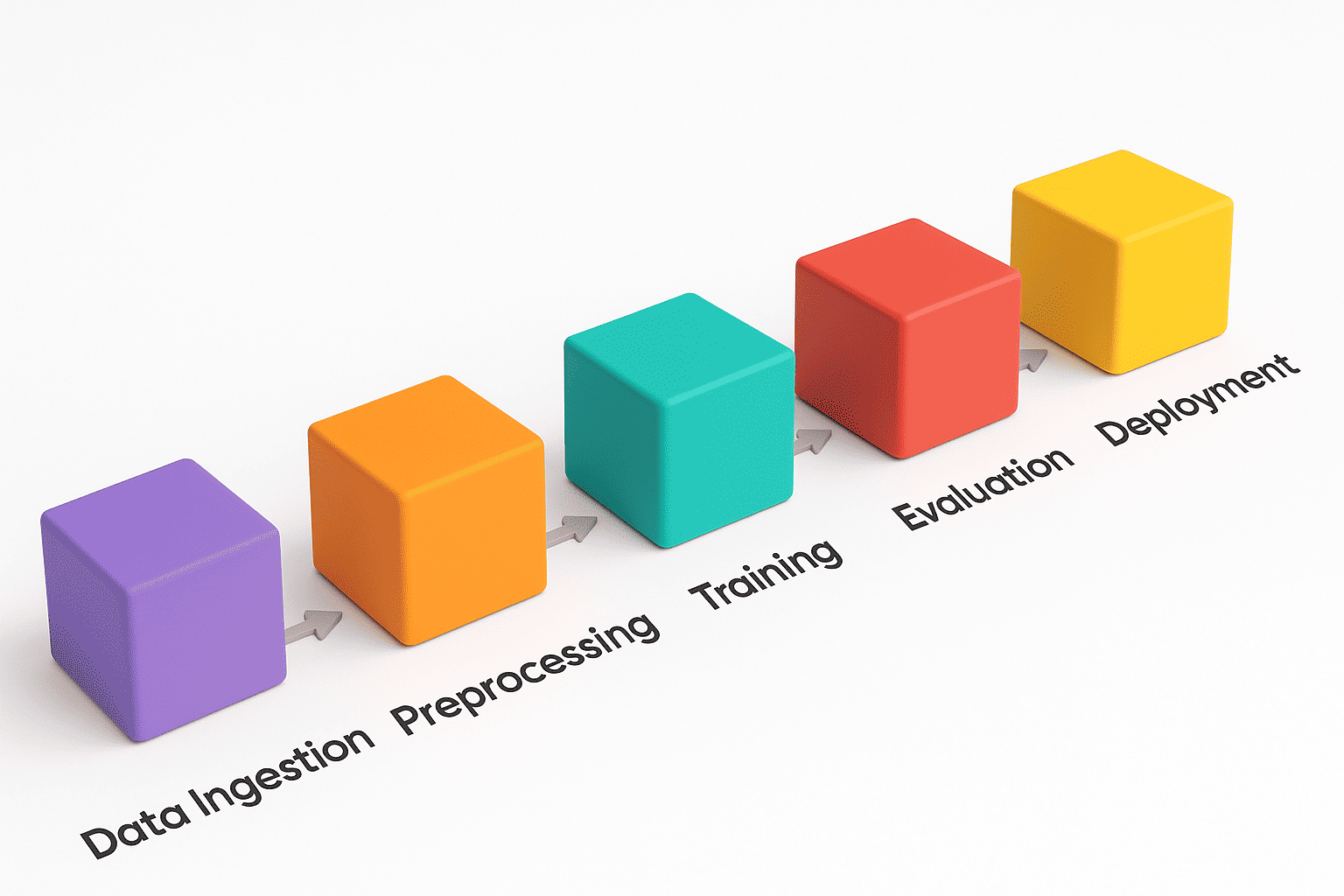
20250930_1137_3D Machine Learning Pipeline_simple_compose_01k6ckmzsbeegajkm24k6g0vsq
 

  1. Python (3.8+).
  2. scikit-learn - good in traditional ML.
  3. NumPy / pandas — data handling.
  4. PyTorch and tensorflow - deep learning.
  5. Hugging Face Transformers Transformers of the present time.
  6. Keras -- an easy API to TensorFlow.
  7. Docker — packaging models.
  8. FastAPI / Flask build model APIs.
  9. Weights / biases / mlflow - experiment tracking.

Practise: In a virtual environment, install these libraries. Start tutorial notebooks on each.

4. Practical projects (step by step plans).
 

I list projects by level. I also provide steps to every project.
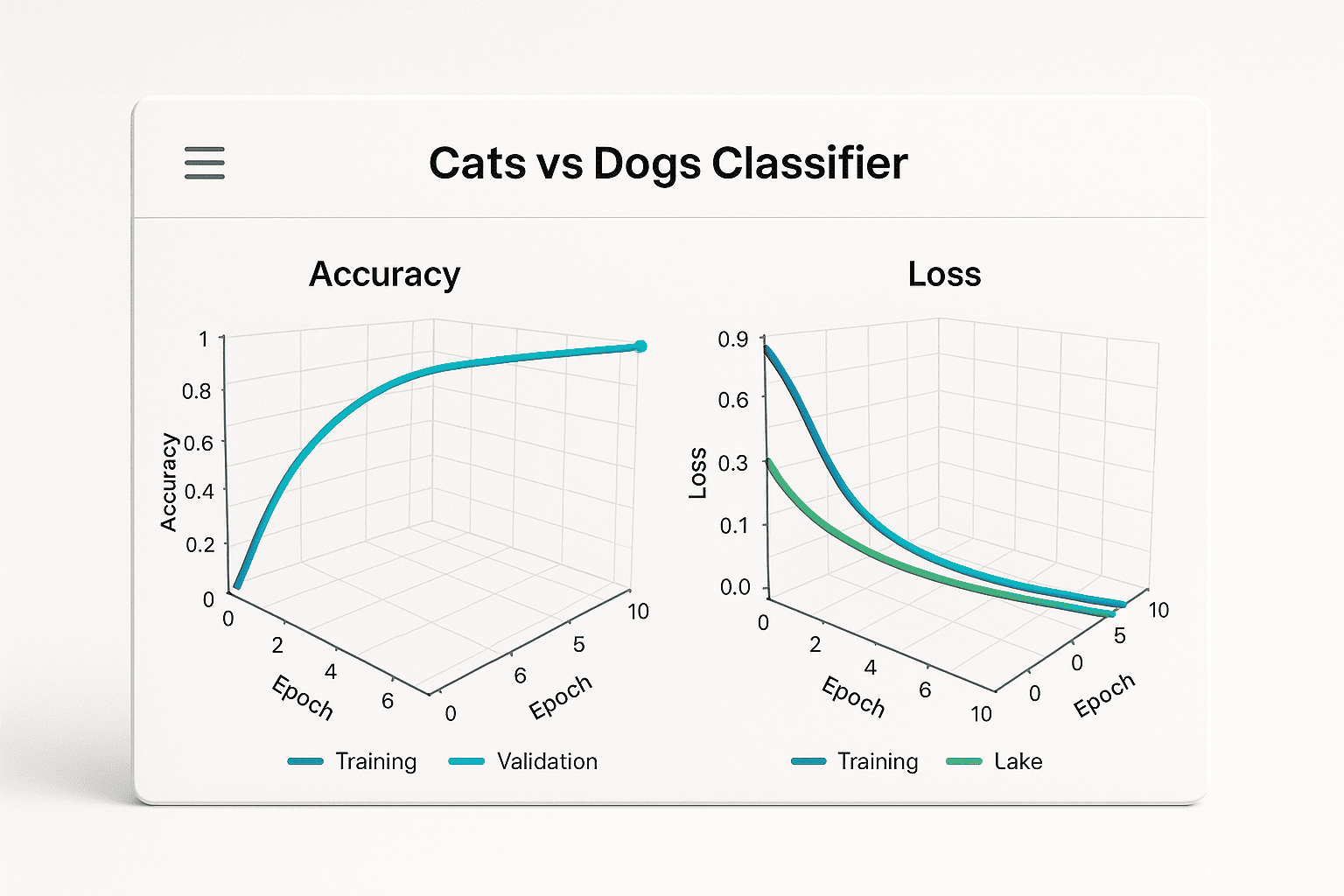
20250930_1140_Cats vs Dogs Dashboard_simple_compose_01k6ckv083fr68n5q1s1p2t6fx
 

Novice project: Image classifier (Cats vs Dogs)

  1. Dataset: A small labelled dataset (e.g., 2000 images).
  2. Clean: De-noise, train/val/test.
  3. Model: Small CNN/transfer learning (MobileNet/VGG).
  4. Train: Train 10 20 epochs, monitor loss and accuracy.
  5. Evaluate: Precision/recall, confusion matrix.
  6. Enhance: Data augmentation, fine-tune pretrained model.
  7. Deploy: Save model, make a basic API with Fastapi.

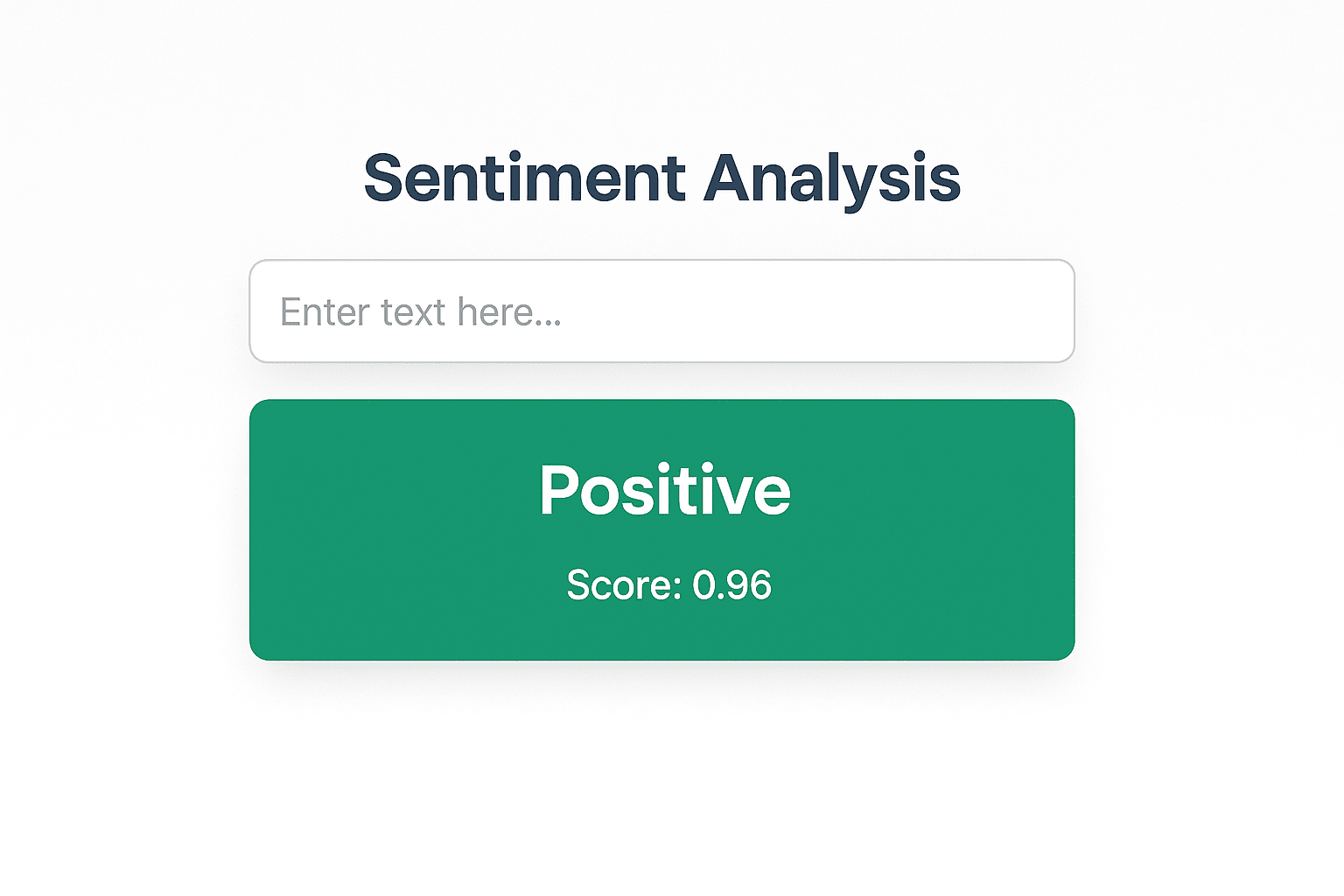
Middle project: Tweeting sentiment analysis.

20250930_1142_Simple Sentiment Analysis App_simple_compose_01k6ckzqh7e4vt2sgg87t4zpdj
 

  1. Retrieve tweets using a keyword.
  2. Uncluttered text ( eliminate links, emojis).
  3. Pretrained embedding tokenize and transformer model.
  4. Train and evaluate.
  5. Deploy and present as a web application of input text sentiment.

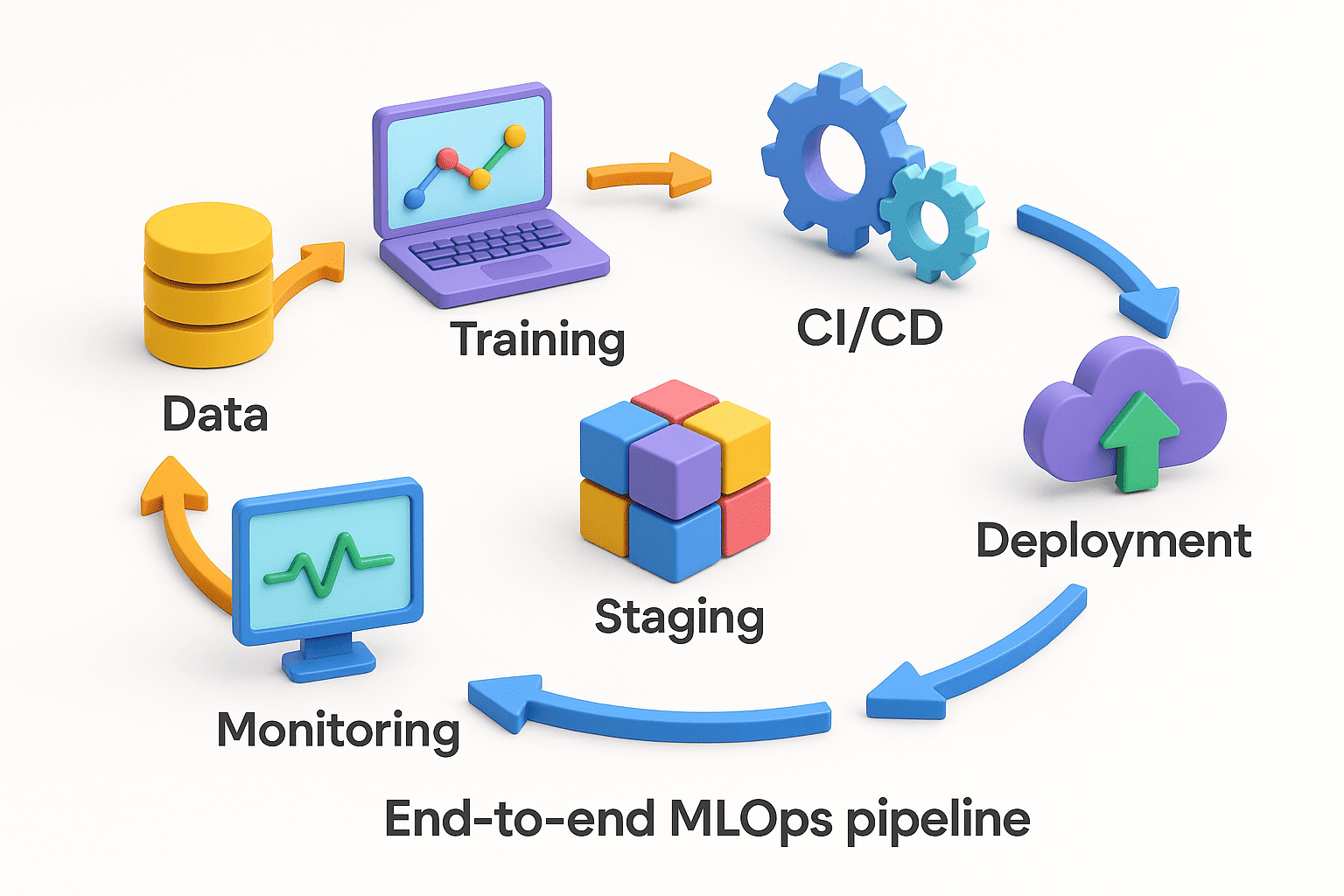
State-of-the-art project: End-to-end MLOps pipeline.

20250930_1144_3D MLOps Pipeline Diagram_simple_compose_01k6cm2yj2fcsrgee1nybhqw27
 

  1. Develop data pipeline (ingestion -cleaning).
  2. Staging, test model of trains.
  3. Automate retraining and deployment.
  4. Data drift (monitoring of the use).
  5. Add rollback and versioning. 
     

5. Deployment and MLOps (easy steps)

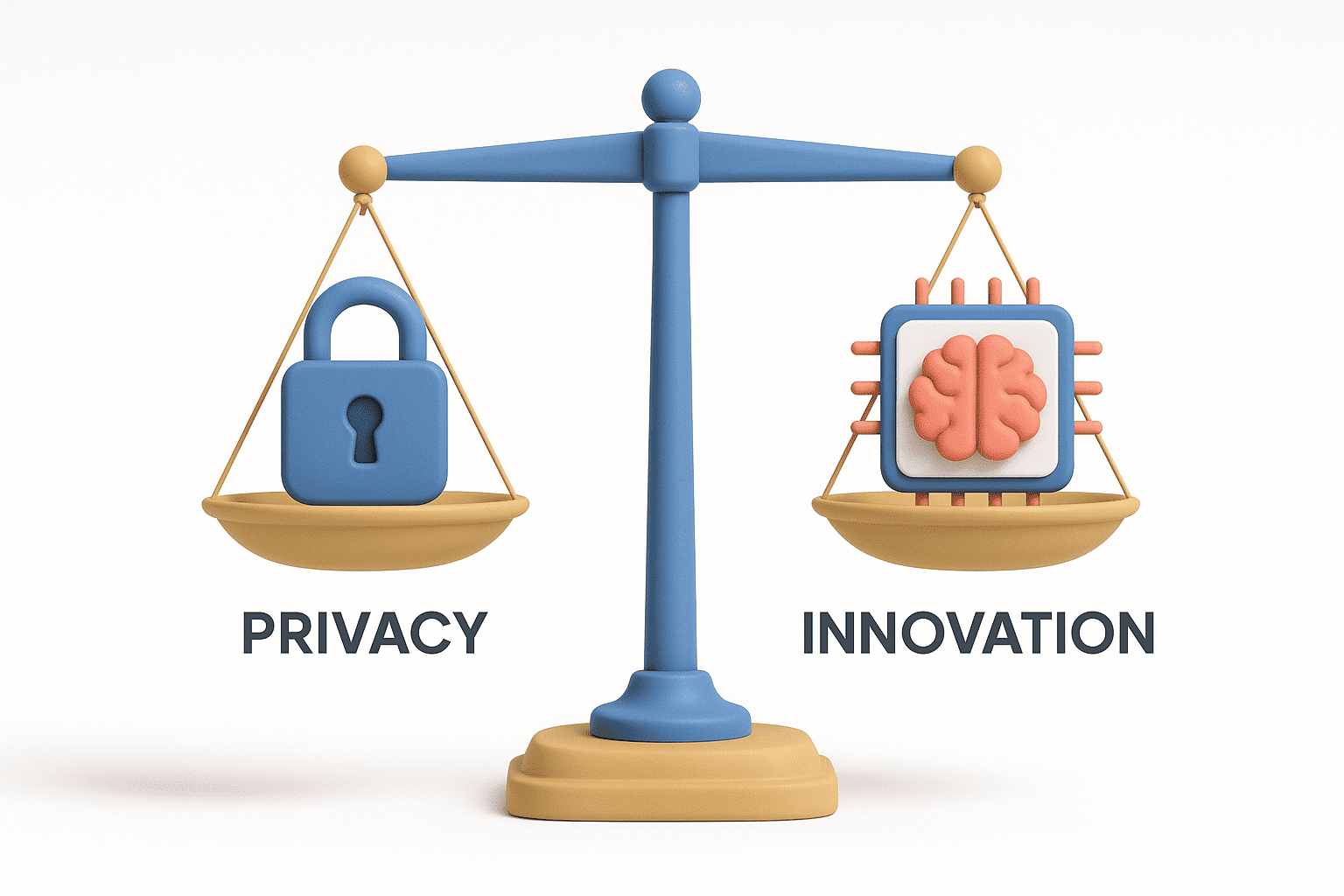
20250930_1146_Privacy vs Innovation_simple_compose_01k6cm5ej2fdkb9r0774wf3c1h
 

  1. Save your model: Save in standard formats (TorchScript, SavedModel).
  2. Service: API: fastapi or flask + gunicorn.
  3. Containerize: Construct Dockerfile and run an image.
  4. AWS/GCP/Azure or serverless (Cloud Run) deployments.
  5. Monitor: Record predictions, monitor latency and errors.
  6. Retrain: Retraining should be automated with change in data.

6. The best practices, safety and ethics.

  1. Use discretion: do not reveal personal information.
  2. Benchmark equity: group check model bias.
  3. Explainability: provide simple explanations (LIME, SHAP) where necessary.
  4. Proper usage: consider the risk of misuse.
  5. Data and license rights: use datasets with appropriate licenses.

7. Move from expert to leader

  1. Read research papers and recreate findings.
  2. Give back to the open source and cooperate.
  3. Post tutorials and blogs.
  4. Mentor others and give talks.
  5. Learn edge subjects: transformers, self-supervised learning, RL.

Conclusion — Your Journey to Mastering AI

Working on AI is not just learning the buzzwords and mimicking others. It is about creating a solid base, doing the exercises one by one, and always learning from the real-world projects and the latest research.
We had initially planned to go through the basics of Python and math, then we moved on to machine learning and deep learning, we got acquainted with the practical side through projects, and finally, we touched on advanced topics like deployment, MLOps, and ethics. Your path is clear no matter you are a novice or an already skilled person: learn → build → share → improve.
The development of AI is very rapid, and the best way to keep up with it is to be consistent. One small progress made every day will amount to a significant advancement in the long run. Keep your practice going, retain your inquisitiveness, and be a part of the AI community. Following the road map of this guide, you will become a novice first, then an expert and finally a leader who will be responsible for the future of AI.
👉 Next step for you: Choose one small project such as image classification or sentiment analysis that you can complete today and get started. The journey of mastery is first of all action.

FAQs

Consulting services can provide insights, strategies, and solutions to address specific challenges, improve efficiency, enhance decision-making, and ultimately contribute to the overall success of your business.

We offer a range of services, including strategic planning, financial advisory, operations optimization, market research, and more. Our goal is to tailor our services to meet the unique needs of each client.

Our fees are structured based on the scope and complexity of the project. We offer different pricing models, including hourly rates, project-based fees, and retainer agreements. The specific fee structure will be discussed and agreed upon during the initial consultation.

Certainly! We have a collection of client testimonials and case studies that highlight the success stories of our consulting engagements. Please visit our 'Client Success Stories' section for more details.

We are committed to staying at the forefront of industry trends and best practices. Our team actively engages in continuous learning, participates in relevant conferences, and maintains a strong network of industry professionals to ensure that our consulting services are informed by the latest insights and innovations.

Learn Python and basic math. Build a simple project like a classifier.

No. Non-programmers can learn concepts and use low-code tools, but coding helps a lot.

Do projects, contribute to open-source, and participate in competitions (Kaggle).

Jan 27, 2026 • 11 min read
Best Web Hosting in Kashmir: Why Kashmiri Businesses Need Reliable Global Providers

Hosting in Kashmir requires reliability and security. Learn why international hosting like Hostinger...

Nov 04, 2025 • 9 min read
How to Remove Malware from WordPress – Manual & Auto Methods

Is your WordPress site hacked or infected? This complete guide explains how to remove malware manual...

Nov 03, 2025 • 7 min read
What Is a Soft 404 Error (and How to Fix It)

Learn what a soft 404 error is, why it matters for SEO and how to fix it with step-by-step advice.

Oct 11, 2025 • 22 min read
How to Start E-Commerce in Kashmir: A Comprehensive Guide

Learn how to start e-commerce in Kashmir with this comprehensive guide. Discover legal requirements,...

Oct 09, 2025 • 10 min read
What Exactly is DNS and How Does It Work?

When you enter "example.com" in your web browser and press Enter, an interesting process unfolds, on...

Oct 07, 2025 • 7 min read
SEO is Old – AEO and GEO Are the Future of Search!

Learn how AEO and GEO are reshaping search with answer-first and local strategies. Get actionable ti...

Oct 05, 2025 • 5 min read
SEO Tips for Your Kashmir Travel Website

Boost visibility, attract travelers, and rank higher with these essential SEO tips for your Kashmir...

Oct 05, 2025 • 10 min read
Best Programming Languages for Cybersecurity

In this article, we discuss the best programming languages to use in cybersecurity in 2025+, why it...

Oct 03, 2025 • 6 min read
Business Opportunities in Kashmir’s Digital Era

Discover the emerging business opportunities in Kashmir’s digital era. From e-commerce and startups...

Oct 03, 2025 • 6 min read
Future of Kashmir Business in the Digital Era

Discover how Kashmir businesses can thrive in the digital era with e-commerce, digital marketing, an...

Oct 03, 2025 • 9 min read
Why Kashmiri businesses need a website

A clear, practical guide for Kashmiri businesses: why a website matters, step-by-step setup

Oct 01, 2025 • 57 min read
How Kashmiris can grow their business online and boost sales

Explore practical and feasible methods through which local businesses in Kashmir can develop their b...


5 min read
Sep 30, 2025
By Musaib Lone
Share

Leave a comment

Your email address will not be published. Required fields are marked *

Related posts

Oct 01, 2025 • 7 min read
Using AI to Boost E-commerce Sales — Step-by-Step Guide

Learn how to use AI to increase e-commerce sales: practical steps, tools, SEO tips, image prompts, a...

Your experience on this site will be improved by allowing cookies. Cookie Policy